
By Nicole Ford Photography
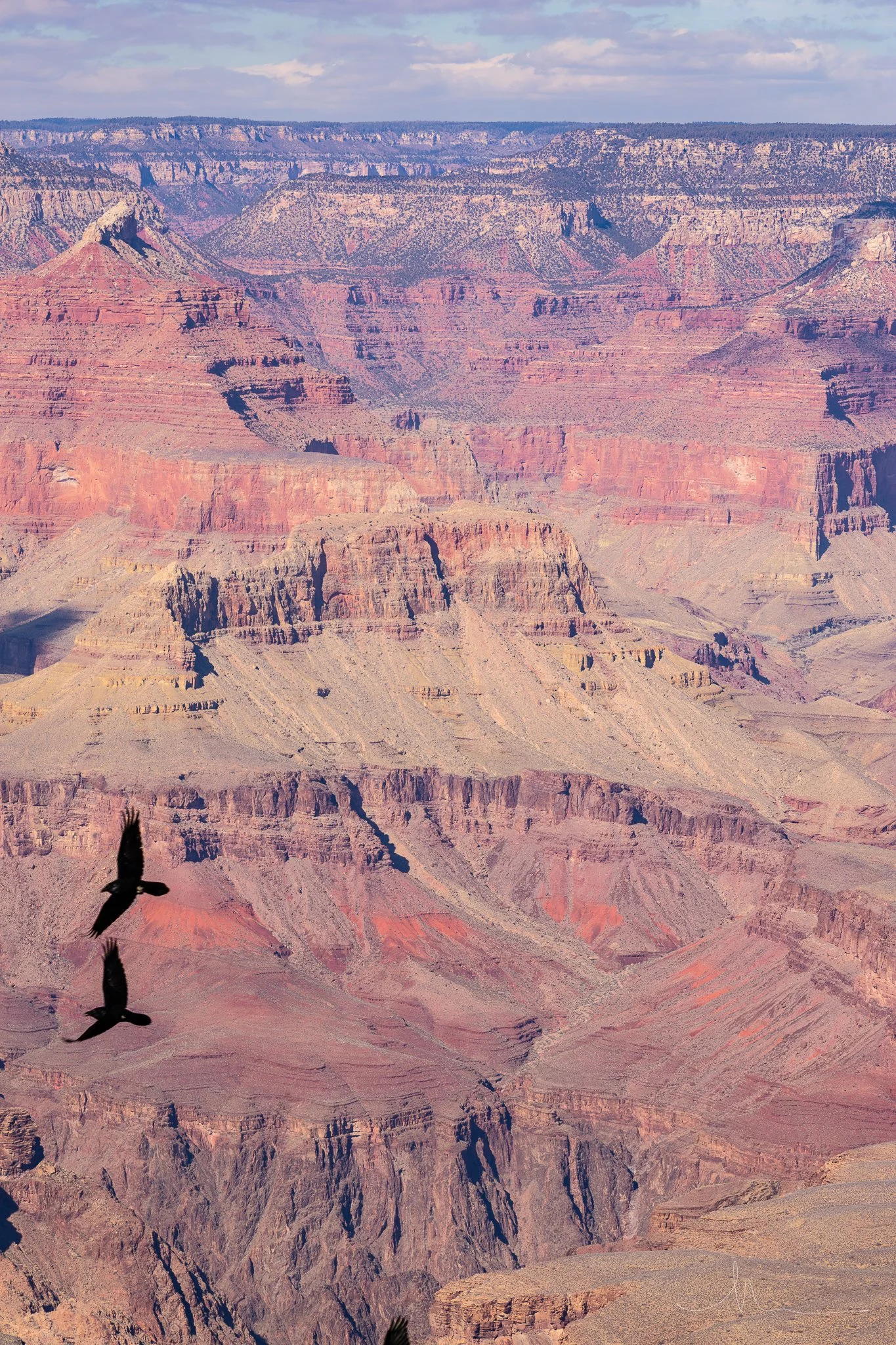
Grand Canyon South Rim with Birds: Photo by Nicole Ford
There are few places in Arizona that compare to standing along the South Rim of the Grand Canyon. The landscape stretches for miles, with towering cliffs, deep valleys, and colorful rock formations that reveal nearly two billion years of Earth's geological history.
The good news is that you don't have to be an experienced hiker to enjoy some of the Grand Canyon's most spectacular scenery. Many of the South Rim's best viewpoints are accessible by car, free park shuttle, or relatively short walks.
Whether you're visiting for a few hours or planning an entire day, knowing which overlooks to prioritize can help you make the most of your experience.
Start at Mather Point
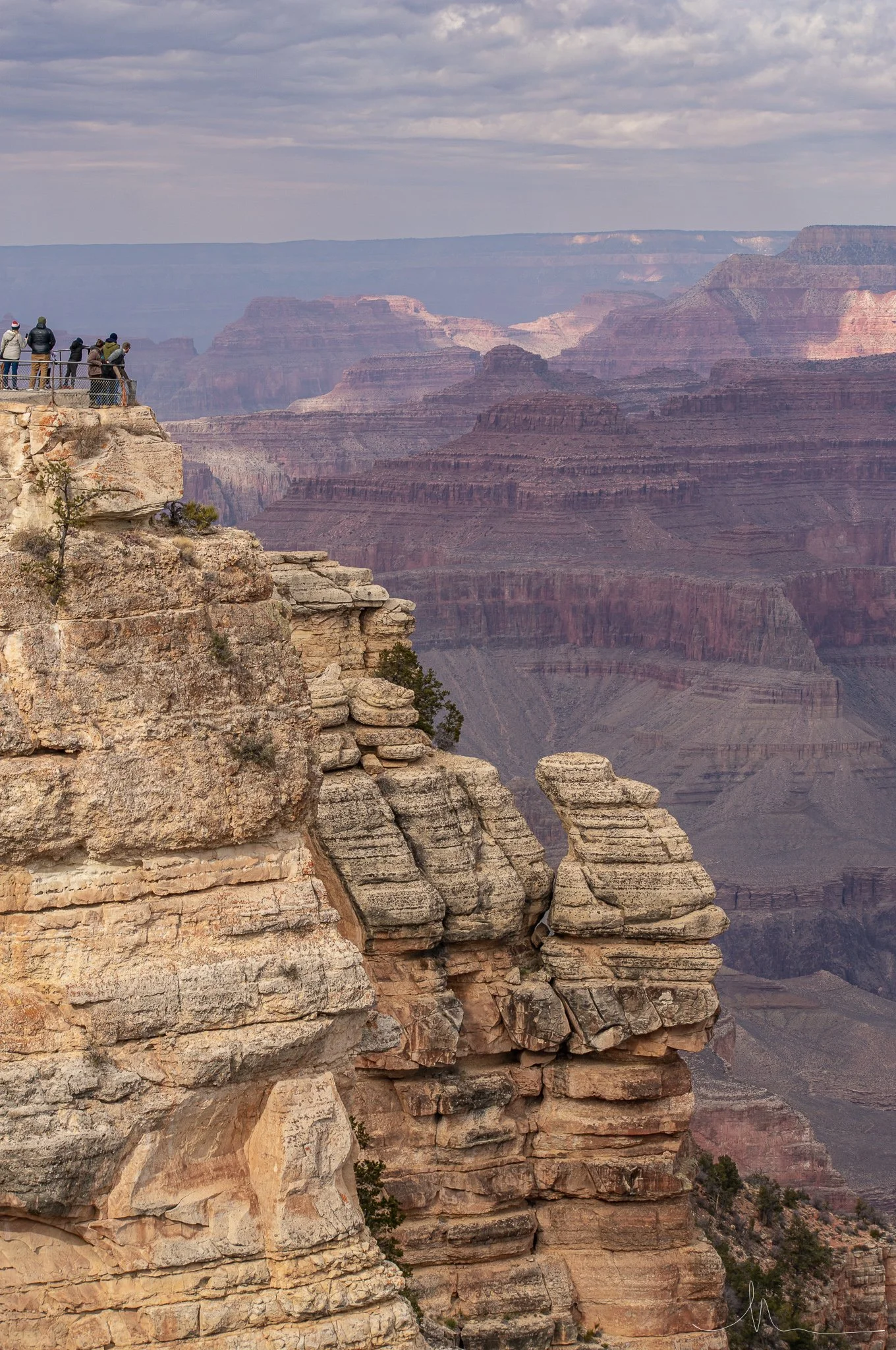
Crowds at Mather Point, Grand Canyon South Rim: Photo by Nicole Ford
For many visitors, Mather Point provides their first unforgettable view of the Grand Canyon.
Located near the South Rim Visitor Center, this popular overlook offers sweeping panoramic views and an excellent introduction to the canyon's immense size.
A paved walkway leads from the visitor center area toward the overlook. Expect crowds, particularly during weekends, holidays, and peak travel seasons.
I recommend allowing at least 20–30 minutes here. Walk between the designated viewing areas, observe the different rock formations, and take time to appreciate the scenery rather than rushing through.
Mather Point is particularly beautiful in the early morning, when sunlight begins illuminating the canyon walls.
The Best South Rim Overlooks You Shouldn't Miss
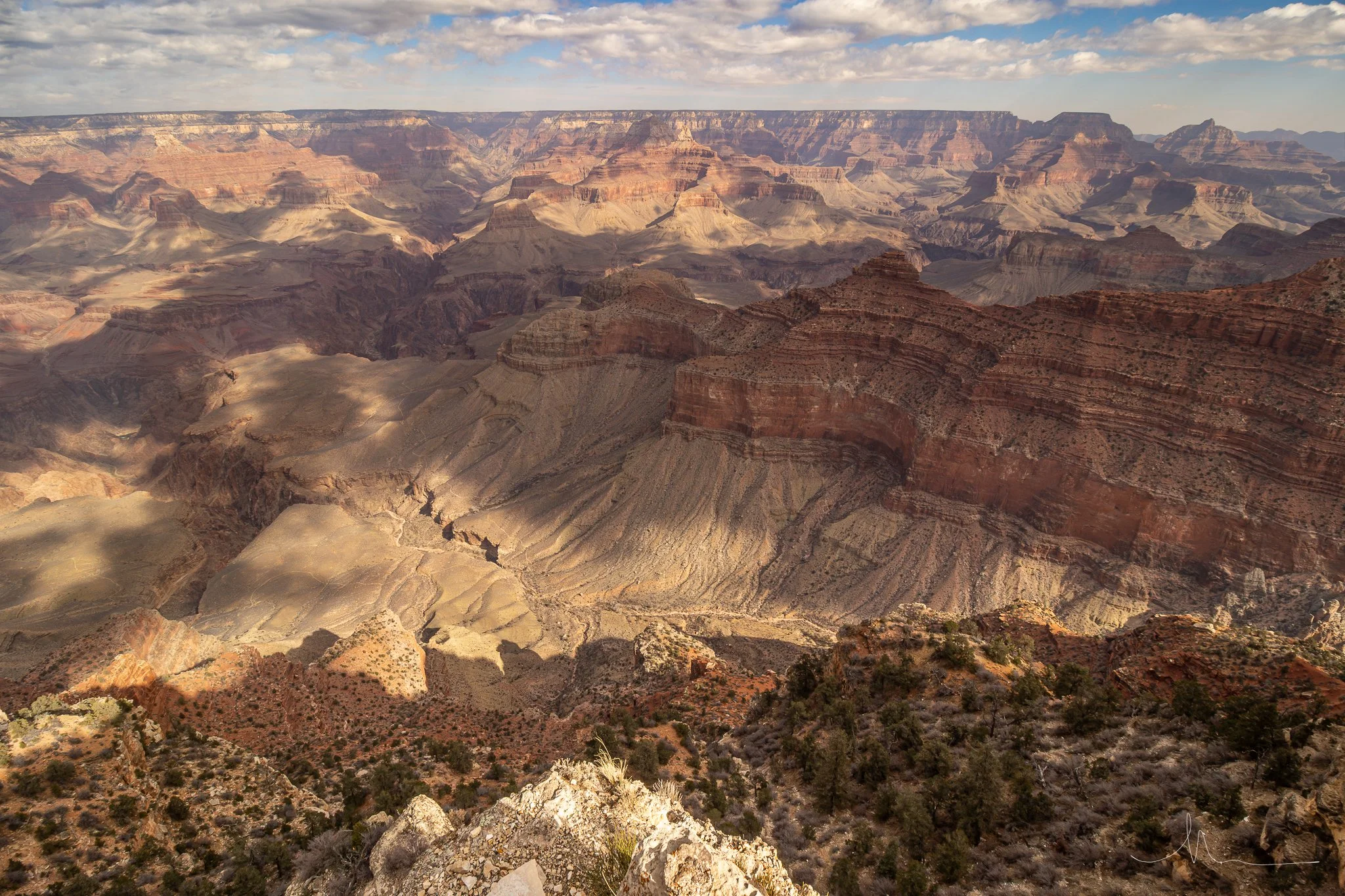
Grand Canyon South Rim: Photo by Nicole Ford
Although nearly every viewpoint along the South Rim offers impressive scenery, a few stand out for their perspectives, geological features, and photographic opportunities.
1. Yavapai Point
Just west of Mather Point, Yavapai Point provides one of the best opportunities to understand the canyon's geology.
The nearby Yavapai Geology Museum features interpretive exhibits explaining how the Grand Canyon formed and how its rock layers developed over millions of years.
Large observation windows also make the museum an excellent stop when temperatures or weather conditions are less comfortable.
Best for: Geology, photography, and first-time visitors.
2. Hopi Point
Hopi Point is among the South Rim's most celebrated locations for sunset photography.
Its projecting position along the rim provides expansive views in multiple directions, allowing visitors to watch sunlight and shadows move across the canyon.
Hopi Point is located along Hermit Road, which is generally accessible by park shuttle rather than private vehicle during the shuttle season.
Best for: Sunset views and wide panoramic photographs.
3. Mohave Point
Located along Hermit Road, Mohave Point offers dramatic views into the canyon and opportunities to see portions of the Colorado River far below.
Its perspective makes it particularly appealing to photographers who want to capture the canyon's depth and rugged formations.
Best for: Colorado River views and late-afternoon photography.
4. Grandview Point
Grandview Point is one of the most rewarding stops along Desert View Drive.
Situated approximately 12 miles east of Grand Canyon Village, the overlook offers expansive views of steep cliffs, mesas, and deeply carved formations.
Its elevated perspective provides an excellent sense of the canyon's scale.
The nearby Grandview Trail is steep and challenging, so visitors looking for a relaxed experience can simply enjoy the overlook without hiking down.
Best for: Dramatic landscapes and scenic photography.
5. Lipan Point
Lipan Point is one of the most impressive overlooks on the eastern South Rim.
From here, visitors can observe sweeping canyon formations and a particularly striking section of the Colorado River.
The view also provides an opportunity to appreciate how the river has helped shape the landscape over millions of years.
Best for: River photography, geology, and expansive canyon scenery.
6. Desert View Watchtower
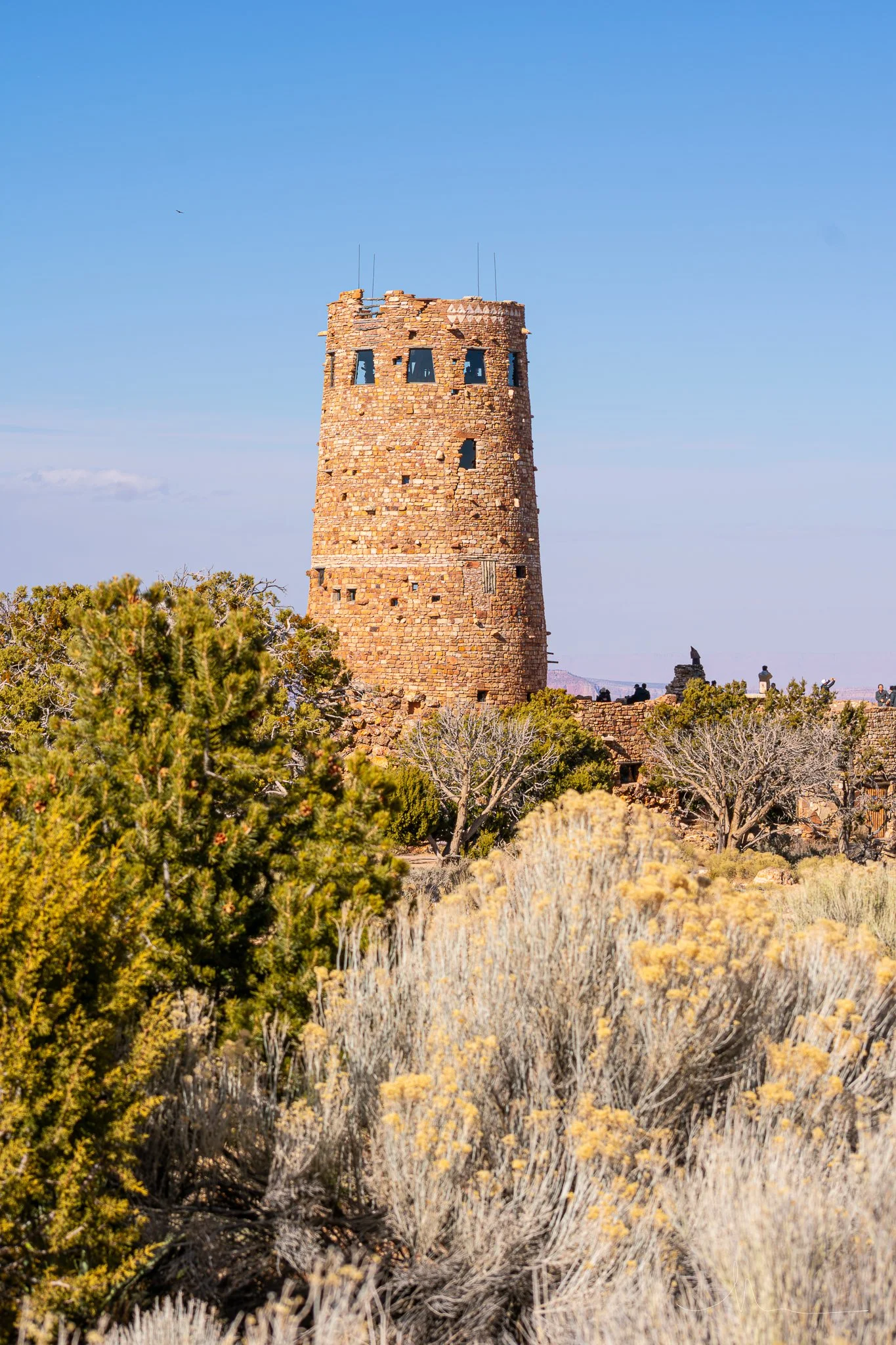
Desert View Watchtower at Grand Canyon South Rim: Photo by Nicole Ford
At the eastern end of Desert View Drive, Desert View offers a distinctly different perspective of the Grand Canyon.
The historic Desert View Watchtower, designed by architect Mary Colter and completed in 1932, was inspired by ancestral Puebloan architecture.
The tower contains artwork and design elements reflecting Indigenous cultural traditions, and the surrounding viewpoint offers magnificent views toward the Colorado River and the eastern canyon.
Desert View is approximately 23 miles east of Grand Canyon Village, making it an excellent final stop on a scenic drive.
Best for: Architecture, cultural history, photography, and eastern canyon views.
Take the Scenic Drive Along Desert View Drive
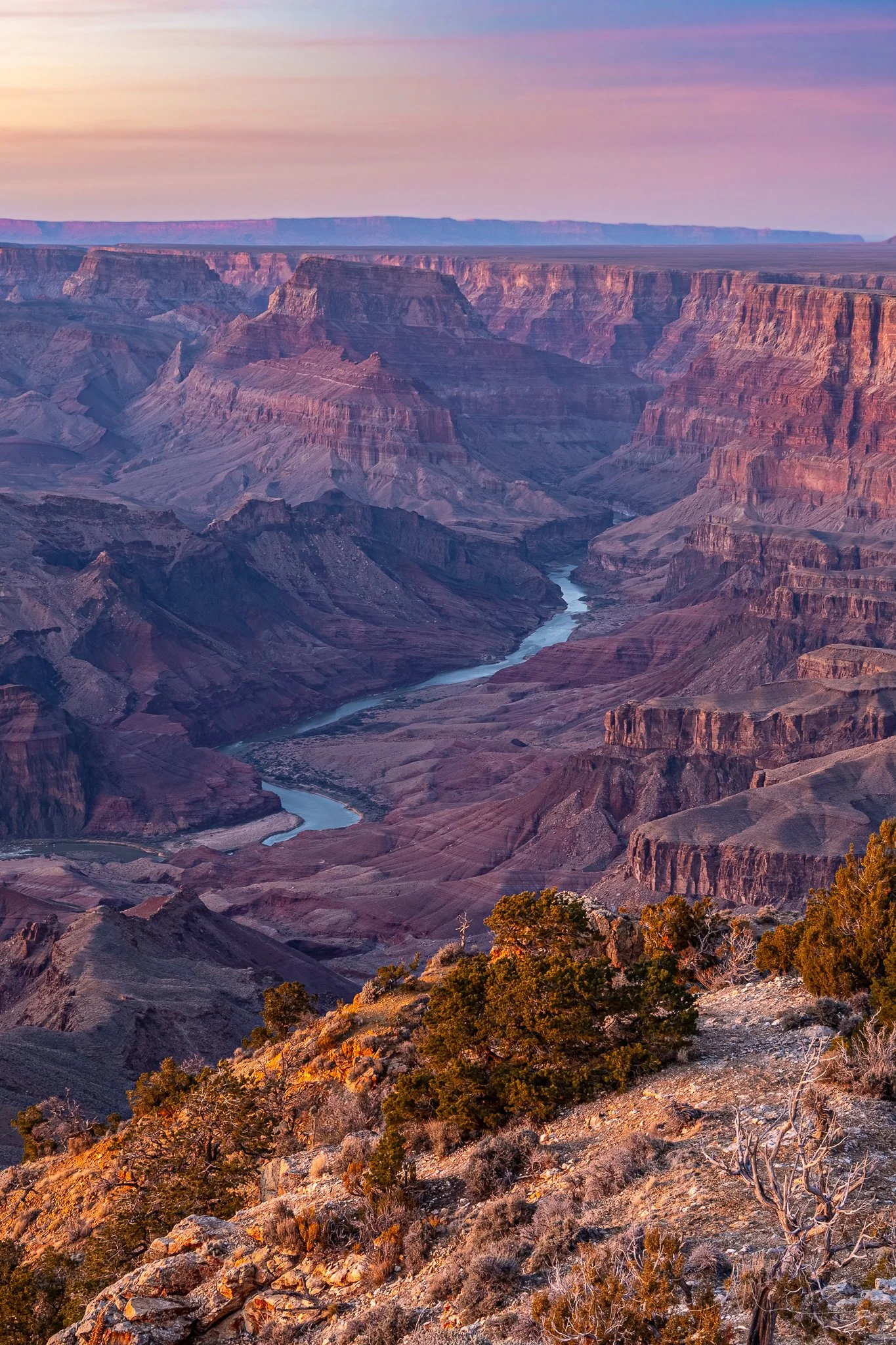
Views at Sunset from Desert View Watchtower at Grand Canyon South Rim: Photo by Nicole Ford
One of the easiest ways to experience the South Rim without extensive hiking is to drive Desert View Drive, also known as Arizona State Route 64.
The approximately 23-mile stretch between Grand Canyon Village and Desert View includes several designated overlooks, including Grandview Point, Moran Point, Lipan Point, and Navajo Point.
Unlike Hermit Road during most of the shuttle season, Desert View Drive is generally open to private vehicles, weather and road conditions permitting.
Allow approximately two to three hours for a leisurely round trip from the village, including stops for photographs and sightseeing.
If you're entering or leaving the park through the East Entrance, this route can fit naturally into your travel plans.
Understanding the South Rim Shuttle System
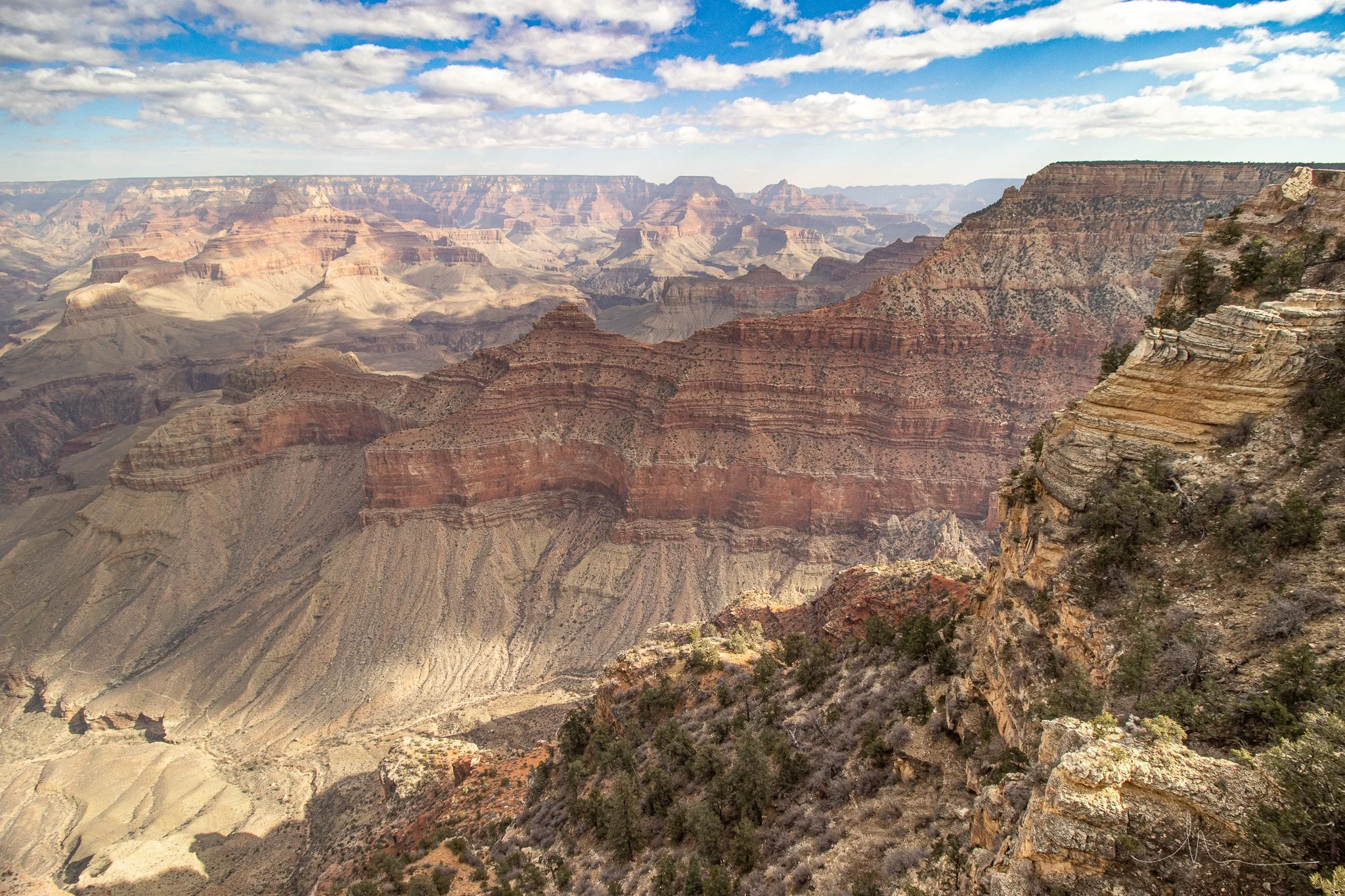
Grand Canyon South Rim Panoramic View: Photo by Nicole Ford
The Grand Canyon's free shuttle buses make it possible to explore several popular overlooks without constantly moving your vehicle.
The Hermits Rest Route, also known as the Red Route, serves viewpoints along Hermit Road, including Hopi Point and Mohave Point. It operates seasonally.
Other routes connect Grand Canyon Village, the Visitor Center, and additional destinations.
Because routes, schedules, and seasonal restrictions change, consult the National Park Service's current shuttle information before arriving.
One important distinction: The park shuttles do not travel to Desert View Watchtower. You'll need a private vehicle or another transportation arrangement to reach that area.
Easy Walks and Short Hikes Along the South Rim
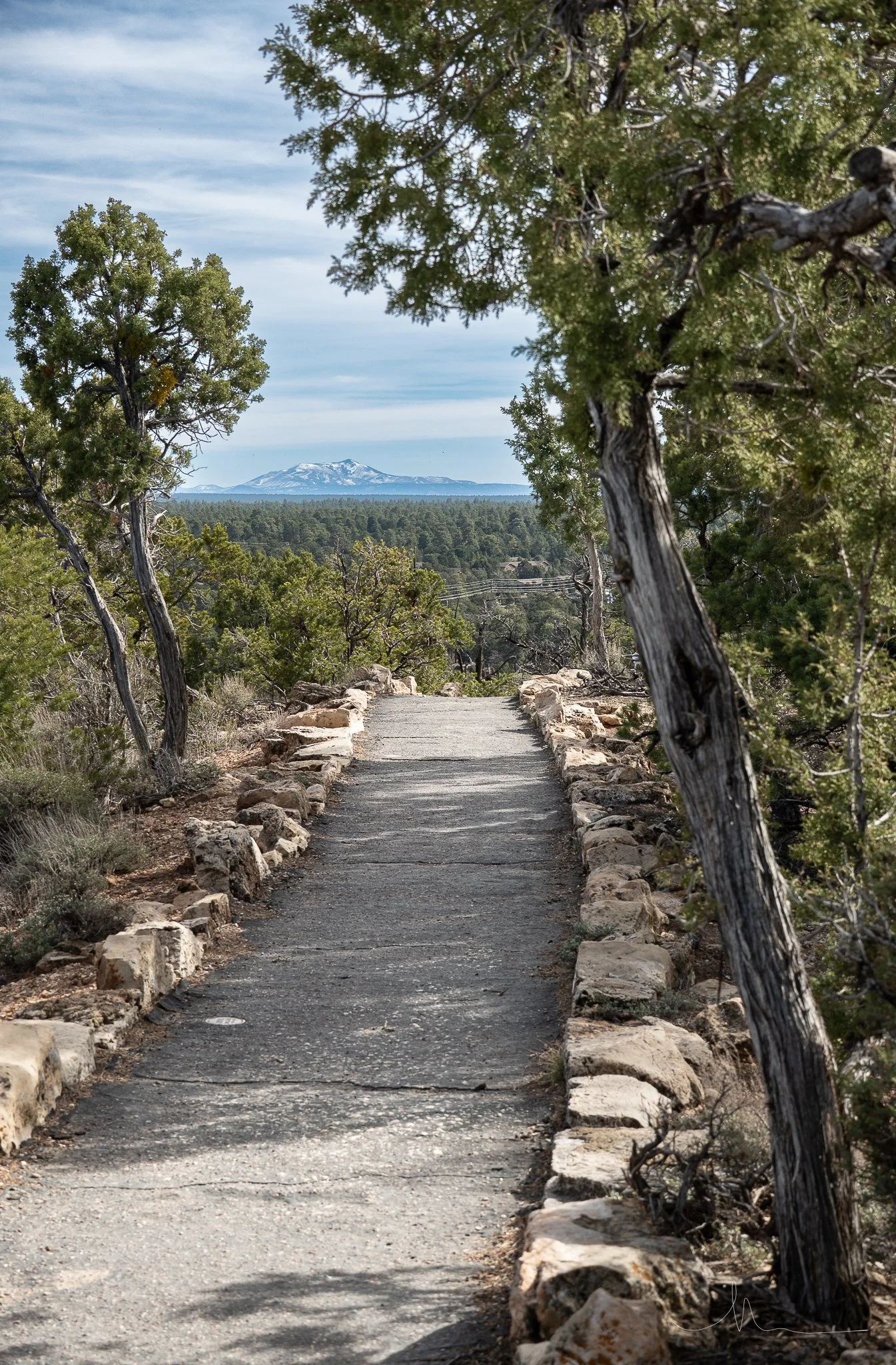
Grand Canyon South Rim Easy Trails: Photo by Nicole Ford
While you can enjoy the Grand Canyon entirely from its overlooks, a short walk can make the experience even more memorable.
These are excellent options for visitors who want additional scenery without committing to a strenuous descent into the canyon.
Mather Point to Yavapai Point
Distance: Approximately 0.7 miles one way
Difficulty: Easy
Highlights: Panoramic views, paved rim walking, and the Yavapai Geology Museum
This is one of my favorite recommendations for first-time visitors because it combines spectacular scenery with an educational stop.
Trail of Time
Distance: Approximately 1.3 miles from Yavapai Geology Museum to Verkamp's Visitor Center
Difficulty: Easy
Highlights: Geological exhibits, rock samples, and canyon overlooks
The Trail of Time is an interpretive section of the Rim Trail that uses distance markers and rock exhibits to explain the Grand Canyon's extraordinary geological history.
It's particularly worthwhile for families and anyone interested in understanding what they're seeing.
A Short Section of the Rim Trail
Distance: Flexible; choose a section that suits your group
Difficulty: Easy to moderate, depending on the segment
Highlights: Scenic viewpoints, changing perspectives, and opportunities for quieter moments
The South Rim Trail extends approximately 13 miles between the South Kaibab Trailhead area and Hermits Rest.
You don't need to walk the entire route to enjoy it. Some sections are paved, while others have uneven surfaces or changes in elevation.
For visitors who want a relatively easy experience, choosing a short paved segment near Grand Canyon Village is a practical option.
Remember that trails descending below the rim, including Bright Angel Trail and South Kaibab Trail, are considerably more demanding than walking along the rim. Even a short descent requires planning for a steep return climb.
Practical Tips for Visiting the South Rim
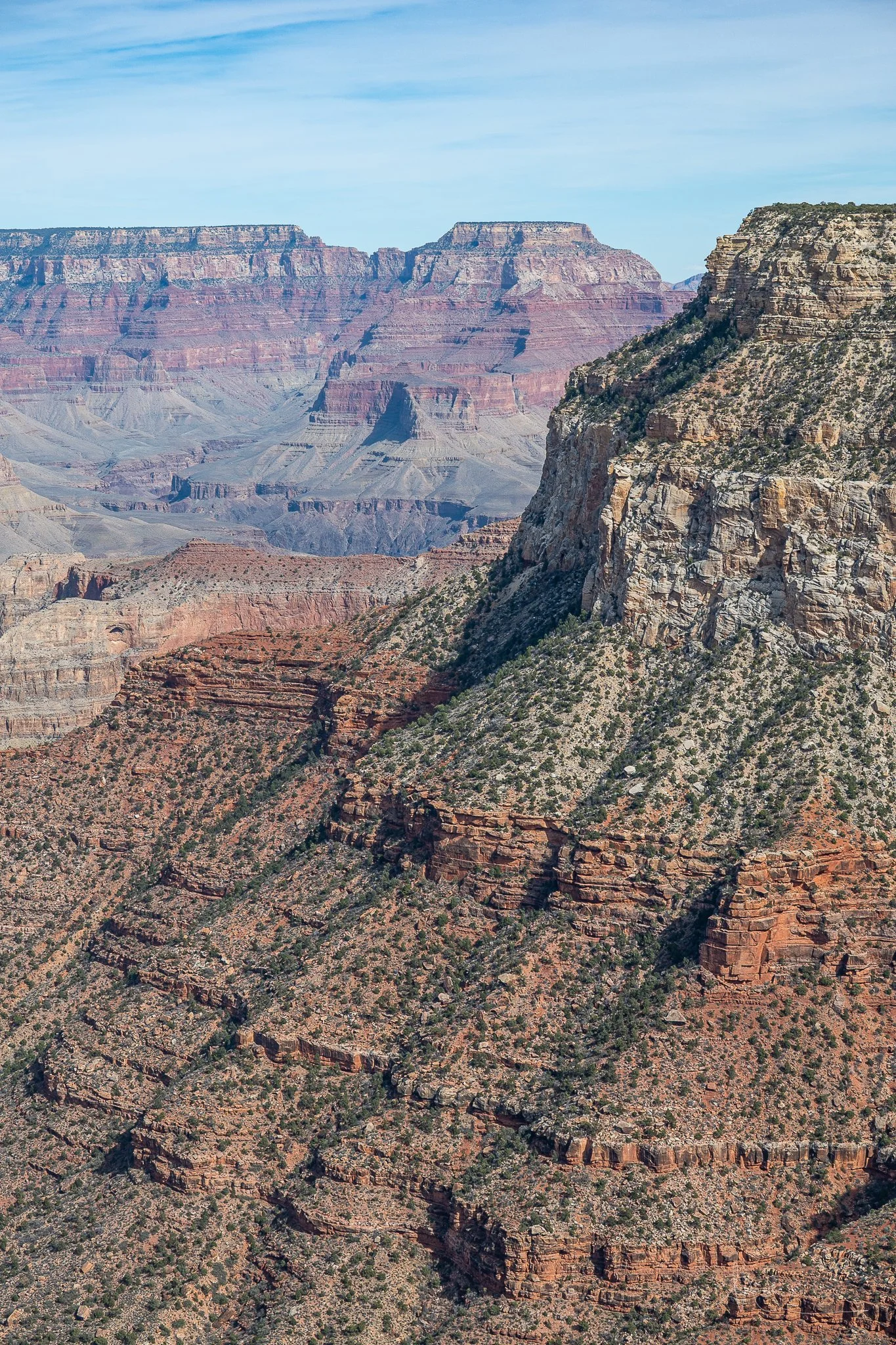
Grand Canyon South Rim: Photo by Nicole Ford
The South Rim is open year-round, but conditions can change considerably throughout the seasons.
Summer brings large crowds, intense sunlight, and frequent afternoon thunderstorms. Winter can deliver snow, icy walkways, and freezing temperatures because the rim sits at approximately 7,000 feet in elevation.
Bring water, sun protection, comfortable walking shoes, and clothing appropriate for the forecast.
Keep these additional considerations in mind:
Arrive early: Parking around the Visitor Center and popular overlooks can fill quickly.
Plan around daylight: Sunrise and sunset provide beautiful lighting, but allow time to return safely.
Stay behind railings: Not every stretch of the canyon rim has protective barriers.
Bring food and water: Services are concentrated in developed areas, and options become more limited along scenic drives.
Check park alerts: Construction, weather, and seasonal closures can affect roads, trails, and shuttle service.
How Much Time Should You Spend at the South Rim?
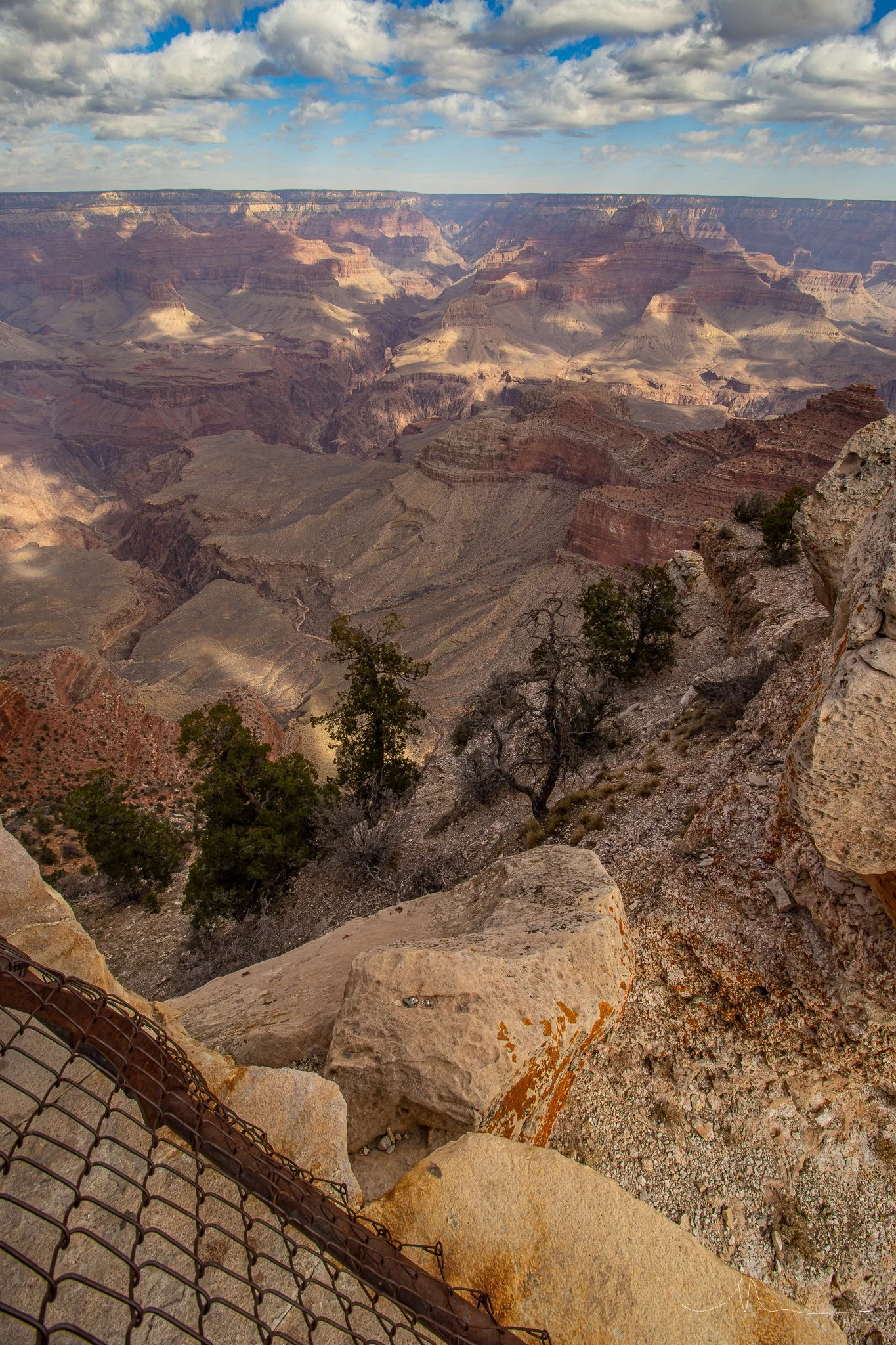
Grand Canyon South Rim: Photo by Nicole Ford
For a first-time visit, I recommend allowing at least one full day.
A practical itinerary would begin at Mather Point, continue with a walk to Yavapai Point, and then include a scenic drive along Desert View Drive with stops at Grandview Point, Lipan Point, and Desert View Watchtower.
If you have additional time, consider exploring Hermit Road by shuttle and enjoying sunset from Hopi Point or Mohave Point.
An overnight stay provides the greatest flexibility, particularly if you want to photograph the canyon during both sunrise and sunset.
Final Thoughts
The Grand Canyon South Rim is one of those destinations that deserves more than a quick photograph and a return to the parking lot. Its overlooks offer dramatically different perspectives, and even a short walk can reveal details that are easy to miss from a single viewpoint.
You don't need to hike to the Colorado River or tackle a demanding trail to have a meaningful experience here.
A well-planned day exploring the overlooks, learning about the canyon's history, and enjoying the changing light can be just as memorable.
Follow Nicole Ford Photography for more fun in Arizona.
References
National Park Service. (n.d.). Desert View. https://www.nps.gov/grca/planyourvisit/desert-view.htm
National Park Service. (n.d.). Day hiking. https://www.nps.gov/grca/planyourvisit/day-hiking.htm
National Park Service. (n.d.). Hermit Road scenic overlooks. https://www.nps.gov/grca/planyourvisit/hermit-road.htm
National Park Service. (n.d.). Rim Trail. https://www.nps.gov/grca/planyourvisit/upload/RimTrailMap.pdf
National Park Service. (n.d.). South Rim shuttle bus routes. https://www.nps.gov/grca/planyourvisit/shuttle-buses.htm
National Park Service. (n.d.). The Trail of Time. https://www.nps.gov/grca/planyourvisit/the-trail-of-time.htm
