
If you've ever driven through Salome, Arizona on U.S. Highway 60, chances are you've noticed it.
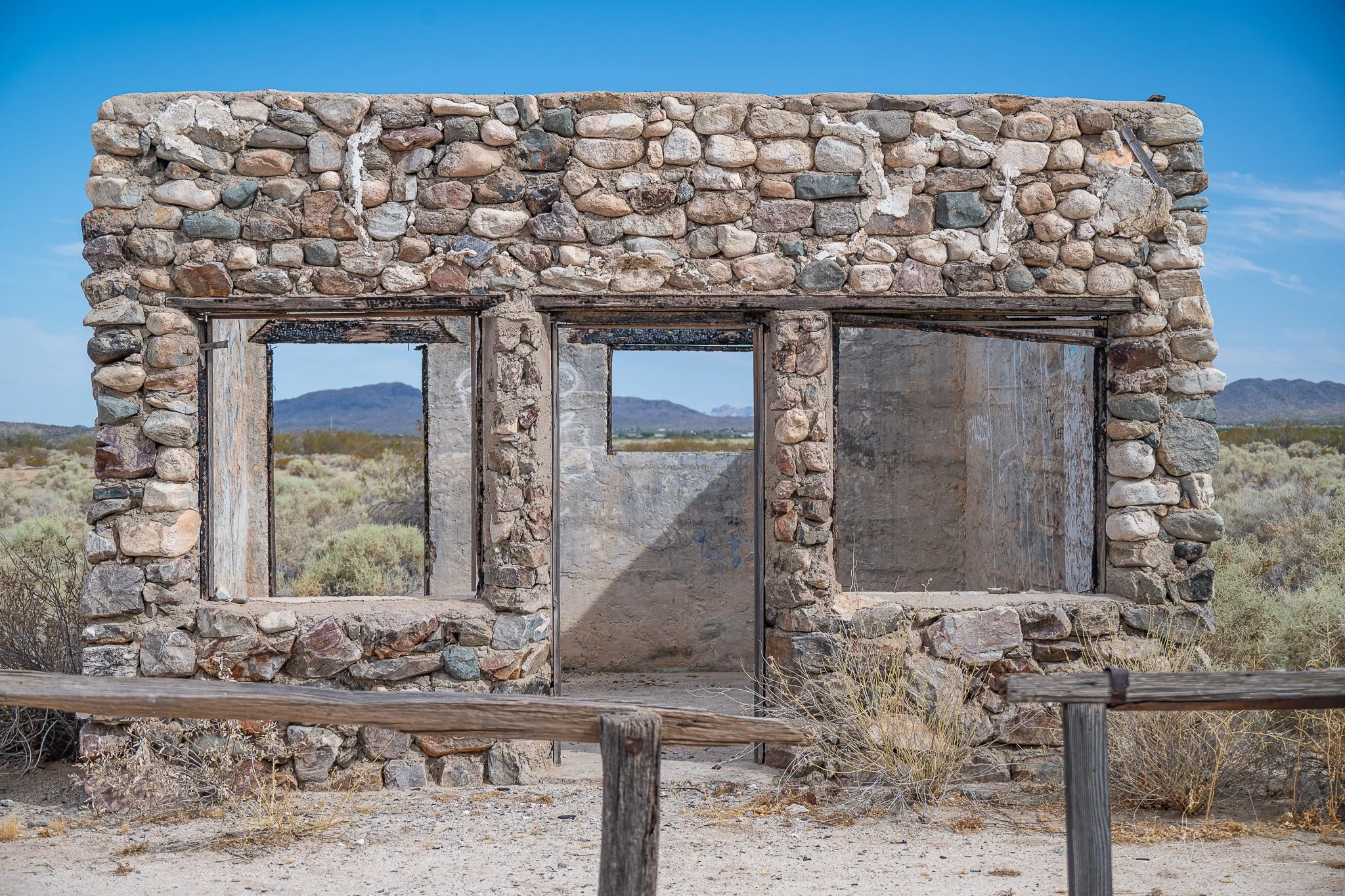
Photo by Nicole Ford
Sitting beside the highway, surrounded by desert and weathered by decades of Arizona sun, is a stone building that has become one of western Arizona's most debated roadside landmarks.
At first glance, it looks exactly like something from Arizona's territorial days. The rough stone construction, old-west appearance, and isolated location make it easy to imagine stagecoaches once stopping here on their journeys across the desert.
There's just one problem.
Nobody seems to agree on whether that's actually true.
The Legend
For years, travelers, photographers, and Arizona explorers have referred to the structure as an old stage stop. It certainly looks the part. Salome sits along a historic transportation corridor that has connected travelers crossing western Arizona for generations (Wikipedia contributors, n.d.).
Long before modern vehicles sped through the region, people traveled these desert routes by horse, wagon, rail, and eventually automobile. The area's history naturally fuels speculation that the building may have played a role in those early journeys (Arizona Memory Project, n.d.).
As stories are passed from one traveler to the next, the building's reputation as a stage stop has continued to grow.
The Other Side of the Story
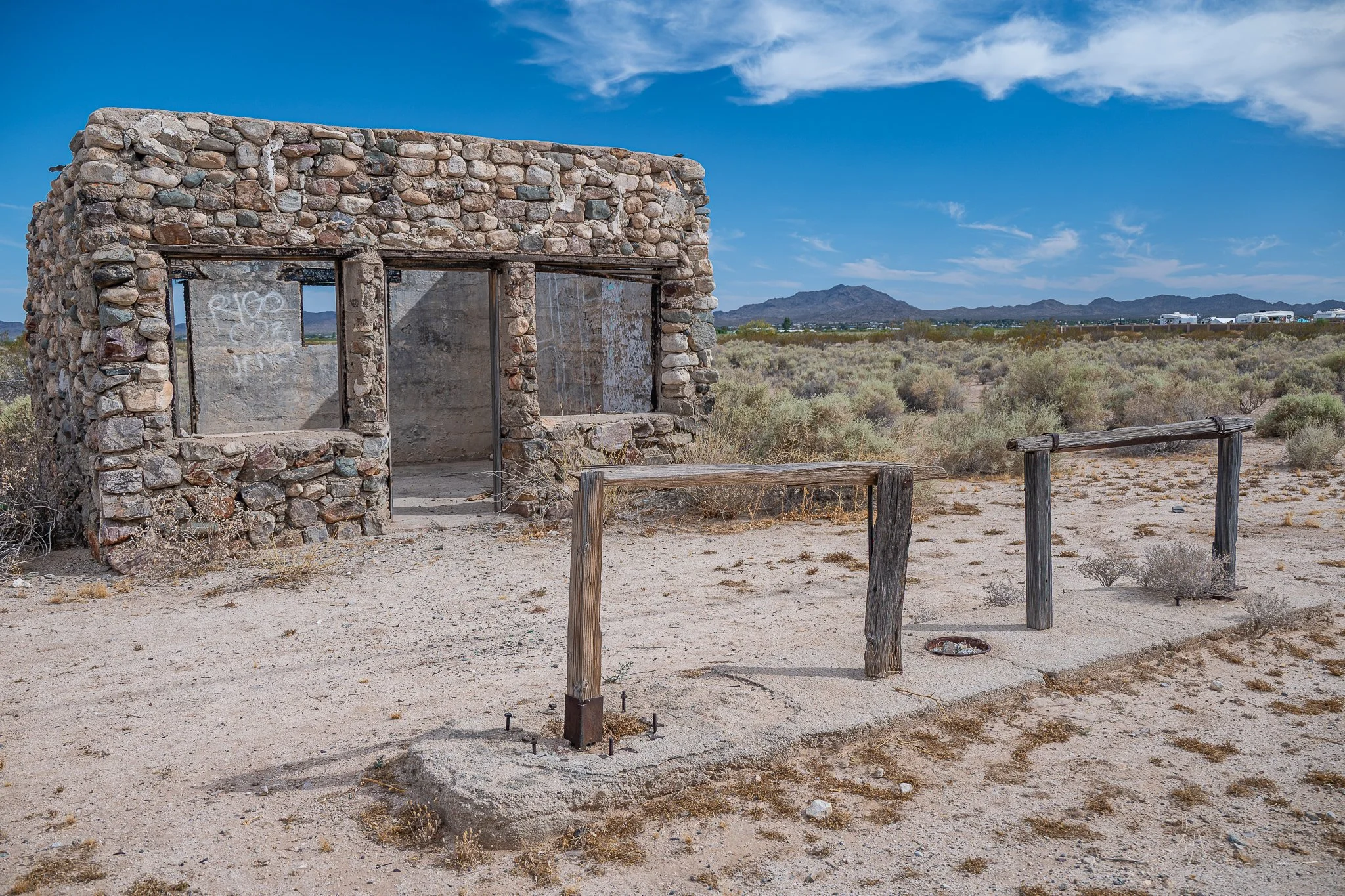
Photo by Nicole Ford
Not everyone believes the stage stop story.
Many Arizona history enthusiasts and longtime locals argue that the structure simply doesn't appear old enough to be an authentic frontier-era building. Others point out that no widely available historical documentation has surfaced linking the building to Arizona's stagecoach era.
Then there's perhaps the most interesting theory of all.
According to a story repeated by numerous Arizona explorers and roadside historians, the building may have been constructed much later—possibly in the early 1980s—as a set for a Chevrolet commercial (Historic U.S. Highway 60 Through Arizona, 2024).
If true, that would completely change the narrative.
Instead of being a genuine Old West relic, the building would actually be a relatively modern structure designed to look historic.
Ironically, that explanation may be just as fascinating as the stage stop legend itself.
It is important to note, however, that publicly available documentation confirming the Chevrolet commercial story remains difficult to locate. As a result, this explanation should currently be viewed as a local theory rather than an established historical fact.
Why the Mystery Persists
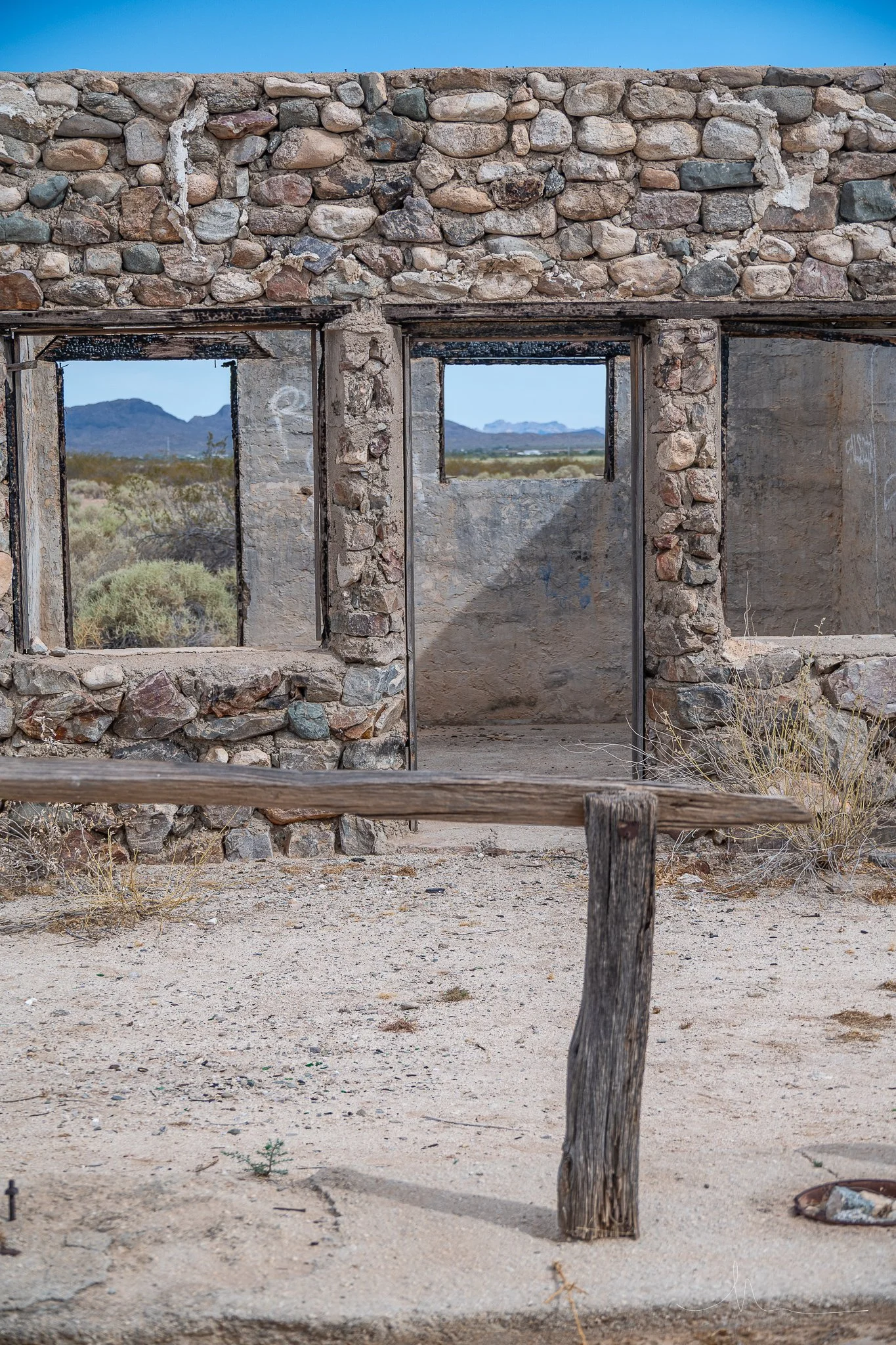
Photo by Nicole Ford
Part of what makes this building so intriguing is that definitive answers are difficult to find.
Unlike Arizona's officially documented historic landmarks, this structure exists in a gray area between history, folklore, roadside attraction, and local legend.
The result is a building that has become a conversation piece for everyone who passes through Salome.
Was it a stage stop?
Was it built for a commercial?
Was it something else entirely?
Depending on who you ask, you'll get a different answer.
The History of Salome
The mystery surrounding the building is amplified by the rich history of the community itself.
Salome was founded in 1904 by colorful promoter and newspaper publisher Dick Wick Hall. The town became famous for Hall's stories and slogans, including the famous phrase "Salome, Where She Danced," which helped put the tiny desert community on the map (True West Magazine, 2017).
Located along what would eventually become U.S. Highway 60, Salome has welcomed generations of travelers crossing Arizona's vast western deserts (Wikipedia contributors, n.d.).
For more than a century, people have stopped here for fuel, food, rest, and stories. Perhaps that's why a mysterious roadside building fits so naturally into the town's identity.
A Piece of Arizona Roadside Culture
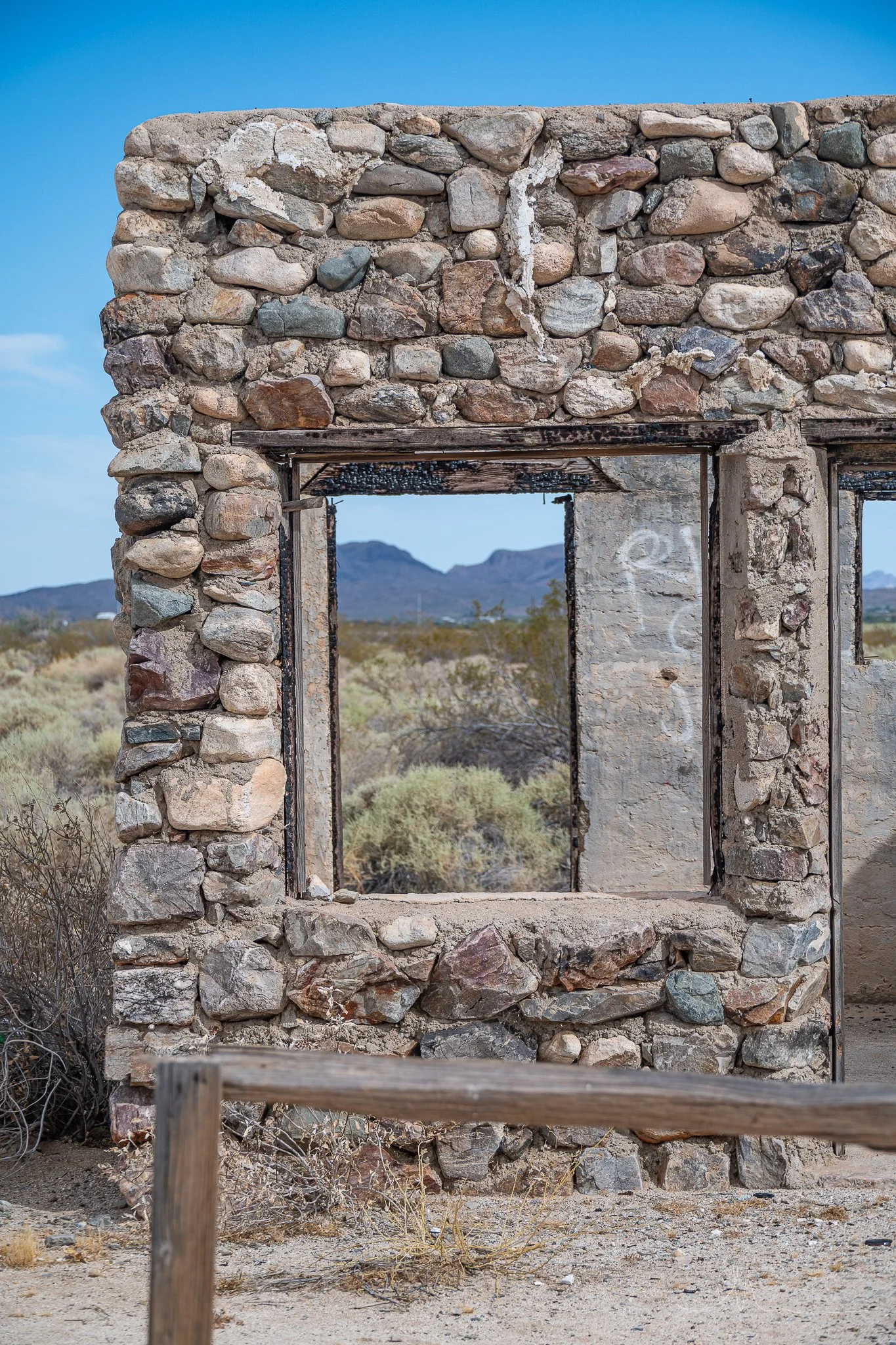
Photo by Nicole Ford
Whether the building dates back to the Old West or the age of television commercials, it has become part of Salome's identity.
Thousands of travelers pass it every year while driving U.S. Highway 60 through La Paz County. Some barely notice it. Others stop for photographs. Many leave with more questions than answers.
And perhaps that's exactly what makes it special.
In a world where almost everything can be looked up instantly, it's refreshing to find a place that still manages to keep people guessing.
So the next time you drive through Salome, take a look.
You may not learn exactly what this building once was.
But you'll probably leave with a theory of your own.
References
Arizona Memory Project. (n.d.). Salome. Arizona State Library, Archives and Public Records. https://azmemory.azlibrary.gov/nodes/view/252212
Historic U.S. Highway 60 Through Arizona. (2024). YouTube. https://www.youtube.com/watch?v=4jubMsc8jEc
True West Magazine. (2017, September 13). The Sage of Salome. https://www.truewestmagazine.com/article/the-sage-of-salome/
Wikipedia contributors. (n.d.). Salome, Arizona. In Wikipedia. Retrieved June 8, 2026, from https://en.wikipedia.org/wiki/Salome,_Arizona
